Posts

Showing posts with the label #astrophysics

HOW OLD IS THE UNIVERSE?
Image
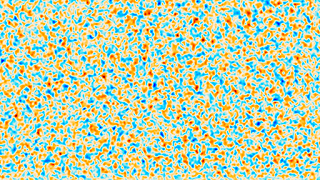
International Scientists Confirm 13.8 Billion Years Old Source:  ACT Research Major Space Benchmark An international team of astrophysicists has just published new research concluding that the universe is about 13.8 billion years old.  They calculated the universe's age by measuring its oldest light.  In recent years, other scientific measurements have suggested that it could be hundreds of millions of years younger.  The light measured by the international team of scientists is the afterglow from the Big Bang. Try Audible and Get Two Free Audiobooks Cosmic Microwave Background The light is called cosmic microwave background.  The light goes back 380,000 years after the birth of the universe when atoms started to form from proteins and electrons.  The picture (above) is called by the scientists a "baby photo" of the universe and of its oldest light.  According to Stony Brook University astrophysicists who co-authored the report, the ph...
SPACE 2020's: WHAT'S UP THERE?

Image
Amazon Book Promotion Source:  Amazon Special Deep Discount for a Limited Time I'm pleased to announce that Kindle and Amazon are beginning a promotion on my book "SPACE 2020's: WHAT'S UP THERE?" Starting May 27 through May 30, the book goes on sale for $3.99. That is a deep discount off the regular price of $6.99.  And, on May 31 through June 2 8AM PDT, it will be selling for $4.99. It then returns to its regular price of $6.99 Great Deals on a Great Resource If you enjoy learning about WHAT'S UP THERE? in space, you'll love the book and find it a great resource on the top space missions and very recent space discoveries of the 2020's.  Here's a link for access to the book  ASIN: B087DV4DZ6 And for access to my Amazon Author's Page, click here   amazon.com/author/ekane ... ...

SUN'S GRAND SOLAR MINIMUM

Image
First Since 1650 Source:  NASA Start of a New Ice Age? NASA scientists say that the Sun is in a much less active phase, meaning far less solar flares, energy and sunspots.  The phase is called a Grand Solar Minimum, which hasn't occurred since 1650 to 1715.  It triggered a Little Ice Age in the Northern Hemisphere with lower temperatures. The question is are we headed toward another Ice Age? Climate Change NASA scientists say we are not on the brink of a new Ice Age.  And the new scientific basis of their conclusion is interesting.  They say the warming of the Earth from fossil fuels and their greenhouse gas emissions is six times greater than even decades long cooling from the Grand Solar Minimum.  In fact, NASA adds:  "Even if the Grand Solar Minimum were to last a century, global temperatures would continue to warm."  A shocking measure of the impact of global warming. Search for Life in Space The Sun is very dynamic and goes throu...

TUMBLING PIECES OF A WRECKED PLANET

Image
Oumuamua - Faraway Message Source:  NASA/ESA Hurtling Through Space Astronomers call the tumbling space object Oumuamua.  In Hawaiian,  that means a message from afar. That's what it certainly is.   Oumuamua was first discovered in 2017.  Some scientists thought it could be a vestige of some sort of alien life, because everything about this space object is so unusual.   New Discoveries and Findings Two astrophysicists, Yun Zhang at the  Observatoire de la Cote d'Azur in  France & Doug Lee at U-CAL in the US, have different findings. They believe that the reddish- colored, cigar shaped object tumbling through our solar  system is the fragment of a wrecked planet that got too close to the star it was orbiting around. The gravitational force of the star destroyed the planet and the  fragment is among the pieces that are left. First Arrival Oumuamua is the first o...

First Photo of a Black Hole In Space

Image
Seeing the Unseeable Source:  ETH Historic Achievement in Astrophysics An international scientific team has released the first photo of a black hole.  This is a landmark achievement in astrophysics.  And, this photo is said, by experts, to give strong support to the late physicist Albert Einstein's 1915 theory of general relativity to explain the laws of gravity. Intergalactic Mystery Masses Black holes are huge, mysterious masses at the center of every galaxy.  They're created by stars collapsing into themselves at the end of their life cycles.  The one in the photo is millions to billions times larger than the sun.  It's located 54 million light years from the earth. Inescapable Black holes are so large and their gravitational field is so intense, nothing including light can escape them.  That is why until now it has been so difficult to photograph them.  They are virtually unseeable.  Today's achievement is the result of an ...

First Photo of a Blackhole in Space

Image
Mystery Masses at the Center of Every Galaxy Courtesy:  NASA Artist Rendering Gravitational Field So Intense Nothing Can Escape History will be made on Wednesday, April 10.  The first photo of a blackhole in outer space is scheduled to be released by a team of international scientists.  The photo will show a giant blackhole millions to billions of times larger than the sun.  This is a milestone in astrophysics coming from the international team at Event Horizon Telescope (EHT).  They utilize a global network of telescopes and have been working on this for years.  What they're delivering is a first - truly intergalactic innovation. Mystery Masses that Scientists Know Little About Blackholes are so large and their gravitational field is so powerful experts say nothing including light can escape them.  That's why until now it's been impossible to get a photo of one - they can't be seen. They form when stars collapse in on themselves at th...

VR Visualizes Black Hole - A First

Image
Virtual Reality First by German & Dutch Scientists Image of Sagittarius A VR Showcases Sagittarius A For the first time, the black hole at the center of our galaxy Sagittarius A has been visualized in virtual reality.  It's innovation by German and Dutch astrophysicists.  The details were just published in the journal Computational Astrophysics and Cosmology. Immersive, 360 Visualization Scientists at Radboud University, The Netherlands and Goethe University, Germany used astrophysical models of Sagittarius A to create images.  They used the images to create a 360 degree virtual reality simulation of the black hole that can be viewed on VR consoles. Research and Educational Tools What the scientists have created is an important research opportunity to learn more about black holes and how they behave.  Their immersive visualizations, the scientists say, are just the start.  They promise much more to come.  VR is also a great educational to...