Posts

Showing posts with the label #life

PILL LETS YOU LIVE 200 YEARS

Image
Breakthrough Medications Under Development to Stop Aging                                                                                Source:  Stock Images The Fountain of Youth Humanity has been searching for the "Fountain of Youth" to extend life since the beginning of time.  Now, a British computational biologist Dr. Andrew Steele says that drugs that could extend life expectancy to 200 years are under development.  In fact, a pill that directly targets and stops the aging process has been tested successfully in mice.  It made them much healthier, warded off disease and extended their lifespan by 35%.  That pill is now being tested in human clinical trials to see if reversing the aging process can be replicated in humans....

Milky Way and Life in Space

Image
New California Institute of Technology Research                                                                 Source:  NASA Milky Way Likelihood of Alien Life in the Milky Way Physicists at California Institute of Technology have used astronomy and statistical modelling to map the probable existence of life on the Milky Way.  Three Caltech physicists have precisely mapped where and when life is most likely to exist in the Milky Way.  Essentially they modelled the evolution of the Milky Way over time.  They used key factors necessary for the development of intelligent life such as Sun-like stars accompanied by Earth-like planets, time necessary for intelligent life to evolve and the frequency of deadly radiation from supernovas. Findings The scientists used time and space metrics...

NASA's Big Discovery of Water on the Moon

Image
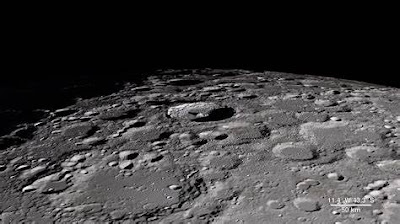
Where There Is Water, There May be Life                                                                                         Source:  NASA Moon Big Scientific Discovery Push Is Underway NASA's SOPHIA Telescope has discovered water on the Moon.  That is a very big finding because the presence of water holds the potential of the presence of life.  Areas with the presence of water on the Moon and on other planets are the prime locations that NASA targets to search for new forms of life in space. NASA's Critical New Questions NASA is now asking a series of critical questions about the findings.  How much water is there in the places that SOPHIA has spotted?  How can the water be used by future astronaut...

24 "Superhabitable" Planets

Image
Planets Better For Life Than Earth                                                  Source:  NASA Sun Flare                                                       Source:  NASA New Scientific Discovery Scientists have discovered 24 "superhabitable" planets with conditions better for life than on Earth and with stars better than our Sun.  The research was led by a team at Washington State University. The planets are warmer, wetter, larger and older than the Earth.  The scientists used a set of criteria to identify the "superhabitable" planets including presence of water, mild temperature and atmospheric conditions, among others. Space Targets For the Search For Life The...

DISCOVERY: LIFE EXISTS IN A HYDROGEN WORLD

Image
Major Discovery by MIT Scientists Source:  NASA's Hubble Telescope Big Impact on Search for Life in Space Scientists at MIT have made a major discovery.   They've found that microorganisms - life - exists in an atmosphere of 100% hydrogen.  In fact, organisms found on Earth can survive in environments  previously considered inhospitable and composed of 100% hydrogen. Expanding the Search for ET The findings have a big impact on the search for life in space.  A significant number of exoplanets, or  orbiting stars, contain atmospheres with large amounts of hydrogen.  These exoplanets have been ignored in the search for alien life until now.  Award-winning astrophysicist MIT Professor Sara Seager, who led the study, is urging astronomers to expand the types of planets where they are searching for ET. Warm Planets Prof. Seager also discovered that worlds in space, even at a distance ten- times away from a star with ...

Oil's Basic Element Found On Mars

Image
Essential Element of Crude Oil Just Discovered on Mars Source:  NASA image of Mars Where There Is Oil, There Could be Life Two astrobiologists have found the basic elements of oil on Mars.  Jacob Heinz of Berlin's Technische Universität and Dirk Schulze-Makuch of Washington State University in Saint Louis have found organic compounds called "thiophenes" that are present in crude oil and coal on Earth.  The thiophenes were discovered in dried mud that NASA's Curiosity Rover dug up in Mars' Gale Crater. This is a remarkable scientific discovery that raises the intriguing question, once again, about life existing on Mars. Oil and Life Where there is oil, there many times is life.  The issue now confronting the scientists is how the thiophenes on Mars were created.  Most often  the creation of thiophenes is a "biotic" process that involves living elements.  If that is the case, according to scientist Schulze-Makuch, "there was ea...

Saturn's Titan Moon & Life

Image
New Science from NASA - Possibility of Life on Titan, Saturn's Largest Moon Source:   NASA Jet Propulsion Lab Moonscapes, Science and Life NASA scientists have mapped Saturn's exotic, largest Moon Titan.  Apparently, Titan has quite a story to tell about the possibilities of life.  NASA has unveiled the first global geological map of Titan.  It shows a strange and exotic world that NASA scientists say is a strong candidate for the search for life beyond Earth. Incredibly Interesting Terrain The map shows dunes of frozen organic material, vast stretches of plains, and lakes and seas filled with liquid methane...all of which may harbor forms of life beyond Earth.  The map is based on radar, infrared and data from NASA's Cassini spacecraft that studied Saturn and its moons from 2004 to 2017.  The data and images now emerging are fascinating. What's Next Clearly, Titan contains organic material that is the ingredient critical to form life.  ...

Martian Rock Tells Big Story

Image
Curiosity Rover Find Source:  NASA Shows Presence of Water, Raises Questions of Life on Mars NASA's Curiosity rover has been exploring the planet Mars for the past seven years.  It just found a rock that contains some of the secrets to what Mars was like when it was a lot more wet.  The discovery is so important that the rock has been nicknamed "Strathdon". Strathdon The rock was found in the Gale Crater or the "clay bearing unit".  The rock is composed of layers of sediment that are unique and wavy.  NASA scientists say this shows evidence of flowing water and blowing wind.  They add the history of water on Mars is much more complicated than they had previously thought.  They now do not believe that Mars went from wet to dry overnight. Signs of Life on Mars   The question still remains: with the presence of water on a warmer Mars with a thicker atmosphere, could that have sustained more than microbial life?  NASA is searching f...

Super-Earth Found in Space

Image
Discovered by International Astronomers Using Powerful Ground Telescopes Source:  NASA's Goddard Space Flight Center May Have "Earth Like" Conditions Astronomers have discovered what they're calling a Super Earth 31 light years away from our solar system.  They say it is "potentially habitable".  The planet is named GJ 357d.  It is six times larger than the Earth and it orbits a sun that is much smaller than ours.  An international team of scientists discovered it using powerful ground telescopes and following up on data first relayed by NASA's planet hunting satellite TESS.  The astronomers believe that it could provide "Earth like conditions" for life. Looking for Signs of Life Highly advanced telescopes will, in the next several years, be going on line that will be able to pick out any signs of life on Super-Earth.  Two telescopes going live in 2021 and 2025 should show whether the planet is rocky and if it has any oceans.  If th...

NASA's Dragonfly Mission

Image
Dragonfly Rotorcraft-Lander Goes to Saturn's Largest Moon - Titan Source:  NASA's Dragonfly Artist Rendering NASA Searching for Life and the Origins of Life on Earth NASA has just announced plans to launch its Dragonfly Mission in 2025.  It's an audacious plan to land the Dragonfly rotorcraft lander on Titan, which is Saturn's largest moon.  It's the only moon in the solar system that has an atmosphere.  According to NASA, Titan is most comparable to early Earth and, most importantly, it has the ingredients to support life.  This is NASA's next mission to a new destination.  It will also mark the first time that a multi-rotor vehicle is deployed on another planet. Source:  NASA - Titan Mission Out of This World Dragonfly has the capacity to fly 100 miles through Titan's thick and cold atmosphere. It will make trips on a daily basis to a number of test sites.  The terrain is diverse and includes oceans, rivers, dunes, lakes and...

From NASA: Clues to Origin of Life

Image
Cyanide Compounds Found in Meteorites Source:  NASA Essential Molecules for Life NASA and a team of university scientists have discovered compounds containing cyanide, carbon monoxide and iron in carbon rich meteorites from space.  They think these compounds may have helped power life on earth.  They just published their findings in the journal Nature Communications. Early Earth The scientists think that cyanide was probably an essential compound for building molecules necessary for life. Besides being present in meteorites, they say the compounds were also present in early Earth before life began when the Earth was constantly bombarded by meteorites. BENNU Data collected by NASA's OSIRIS-REx spacecraft of the asteroid BENNU will be delivered to earth in 2023.  NASA scientists intend to search for the same compounds which according to NASA scientist Jason Dworkin of the NASA Goddard Space Flight Center "may have helped start life on Earth or on other b...